
ခုလို ၂၀၂၆ ခုနှစ် လိုအချိန်ကာလမှာ ELV (Extra Low Voltage) engineering field က တဖြည်းဖြည်း equipment installation အဆင့် ထက်ကျော်လွန်ပြီး system architecture design အဆင့် သို့ ရောက်လာနေပြီဖြစ်ပါတယ်။ အရင်ကELV engineer တစ်ယောက်အနေနဲ့ device တပ်ဆင်တာ၊ cable ချိတ်ဆက်ခြင်းတို့ကို အဓိကအလုပ်အဖြစ် လုပ်ခဲ့ကြပေမယ့်လို့ ဒီနေ့ခေတ်မှာတော့ building systems အများစုကို အပြန်အလှန် ဆက်သွယ်လုပ်ဆောင်နိုင်တဲ့ integrated systems တစ်ခု အဖြစ် design လုပ်နိုင်ခြင်းက အရေးကြီးလာပါတယ်။ ဒါ့ကြောင့် ၂၀၂၆ ခုနှစ်မှာ professional ELV engineer တစ်ယောက်အဖြစ် တိုးတက်လိုသူများအတွက် သိထားသင့်တဲ့ advanced concepts အချို့ရှိလာပါတယ်။
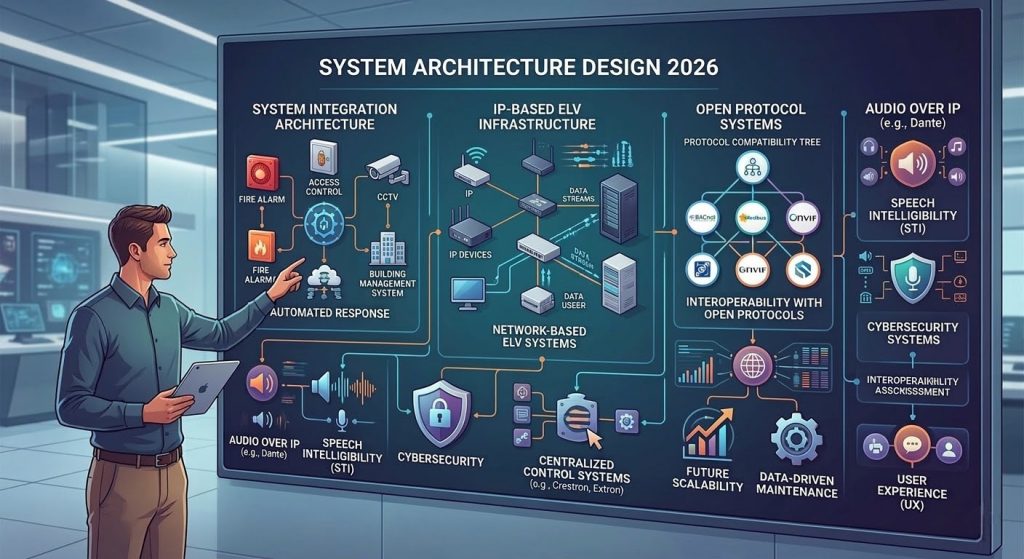
ပထမဆုံး အရေးကြီးတဲ့ concept က system integration architecture ဖြစ်ပါတယ်။ ဒီနေ့ခေတ် modern buildings တွေမှာfire alarm, access control, CCTV, PA system, lift control နဲ့ building management system တို့ကို သီးသန့် systems အဖြစ်သာ မထားတော့ဘဲ တစ်ခုနှင့်တစ်ခု အပြန်အလှန် ချိတ်ဆက်ထားတဲ့ ecosystem အဖြစ် design လုပ်ကြပါတယ်။ ဥပမာအားဖြင့် fire alarm activation ဖြစ်သည့်အခါ access control doors များ unlock ဖြစ်သွားတာမျိုး၊ lift homing လို့ ခေါ်တဲ့ဓာတ်လှေကားများ ground floor သို့ အလိုလျောက် ပြန်ဆင်းလာစေတာမျိုး၊ PA system မှ evacuation announcement ထုတ်ပြန်စေတာမျိုး စတဲ့ automated responses များ ဖြစ်ပေါ်နိုင်ပါတယ်။ ဒီလို system interaction များကို ဖြစ်စေရန်integration architecture ကို အစောပိုင်း design stage မှာစဉ်းစားထားရပါမယ်။
ဒုတိယအချက်က IP-based ELV infrastructure ဖြစ်ပါတယ်။ ဒီနေ့ခေတ် ELV systems အများစုဟာ network technology ပေါ်အခြေခံလာနေပြီး IP CCTV, IP intercom, IP public address system နဲ့ network-based access control systems များအသုံးများလာပါတယ်။ ဒါ့ကြောင့် ELV engineers များအနေနဲ့ networking fundamentals များဖြစ်တဲ့ VLAN configuration, PoE power distribution နဲ့ network bandwidth calculation တို့ကိုလည်း နားလည်ထားဖို့လိုအပ်မှာ ဖြစ်ပါတယ်။
တတိယအရေးကြီးတဲ့ concept က open protocol systems ဖြစ်ပါတယ်။ Vendor-specific solutions တွေကိုပဲ အသုံးပြုတဲ့system များဟာ ရေရှည်မှာ future expansion နှင့် integration အတွက် အခက်အခဲများ ဖြစ်စေနိုင်ပါတယ်။ ဒါ့ကြောင့်modern building automation systems များတွင် BACnet သို့မဟုတ် Modbus ကဲ့သို့သော open protocols များကို အသုံးပြုကြပြီး video surveillance systems များတွင်လည်း ONVIF standard ကို အသုံးပြုခြင်းဖြင့် မတူတဲ့ manufacturers များ၏devices များကို တစ်စနစ်တည်းအတွင်း integrate လုပ်နိုင်ပါတယ်။
AV systems အတွက် အရေးကြီးလာတဲ့ technology တစ်ခုကတော့ audio over IP networking ဖြစ်ပါတယ်။ Modern conference rooms, auditoriums နဲ့ large venues များတွင် traditional analog audio distribution ထက် network-based audio transport ကို ပိုမိုအသုံးပြုလာကြပါတယ်။ ဒီနည်းပညာများထဲမှာ Dante သည် professional AV industry တွင် အလွန်ကျယ်ပြန့်စွာ အသုံးပြုနေသော technology တစ်ခုဖြစ်ပြီး long-distance signal transmission, flexible routing နှင့် low latency audio transport များကို ရရှိစေမှာ ဖြစ်ပါတယ်။
PA system design တွင်လည်း speech intelligibility ကို အထူးအရေးကြီးစဉ်းစားရပါတယ်။ အရင်က speaker wattage များခြင်းကိုသာ အရေးကြီးစဉ်းစားကြပေမယ့် professional sound system design မှာတော့ speech clarity ကိုတိုင်းတာတဲ့Speech Transmission Index (STI) value ကိုလည်း စဉ်းစားရပါတယ်။ Airport terminals, auditoriums, railway stations နှင့်conference facilities များတွင် speech intelligibility က system performance ကို ဆုံးဖြတ်ပေးတဲ့ အရေးကြီးတဲ့ parameter တစ်ခုဖြစ်ပါတယ်။
ELV systems များ network ပေါ်တွင် operate လာသည့်အခါ cybersecurity considerations များလည်း ပိုမိုအရေးကြီးလာပါတယ်။ CCTV systems များ hack ခံရခြင်း၊ access control systems များ unauthorized access ဖြစ်ခြင်း သို့မဟုတ်network attacks များကြောင့် building security ထိခိုက်နိုင်ပါသည်။ ထို့ကြောင့် network segmentation, secure authentication mechanisms နှင့် firmware update management များကို system design stage မှာထည့်သွင်းစဉ်းစားသင့်ပါတယ်။
အခြား advanced concept တစ်ခုကတော့ centralized control systems ဖြစ်ပါတယ်။ Modern commercial buildings နှင့်conference facilities များတွင် multiple systems များကို single interface မှတစ်ဆင့် control လုပ်နိုင်သော control platforms များကို အသုံးပြုလာကြပါတယ်။ ဥပမာအားဖြင့် Crestron နှင့် Extron ကဲ့သို့သော systems များကို အသုံးပြုခြင်းဖြင့်displays, audio systems, lighting controls နှင့် conferencing systems များကို single touch interface ဖြင့် စီမံခန့်ခွဲနိုင်ပါသည်။
Professional ELV system design တွင် future scalability ကိုလည်း ထည့်သွင်းစဉ်းစားရပါတယ်။ Building requirements များသည် အချိန်ကြာလာသည်နှင့်အမျှ ပြောင်းလဲနိုင်သောကြောင့် spare network capacity, modular hardware architecture နှင့် expansion capability များကို design stage မှာထည့်သွင်းထားခြင်းသည် long-term lifecycle cost ကို လျှော့ချနိုင်စေပါသည်။
ဒါ့အပြင် modern facilities များတွင် data-driven maintenance concept ကိုလည်း အသုံးပြုလာကြပါတယ်။ Traditional maintenance approach များက equipment failure ဖြစ်ပြီးမှ ပြုပြင်ခြင်းဖြစ်သော်လည်း modern ELV systems များတွင်device health monitoring, automatic fault alerts နှင့် maintenance analytics များကို အသုံးပြုခြင်းဖြင့် proactive maintenance approach ကို အကောင်အထည်ဖော်နိုင်ပါတယ်။
နောက်ဆုံးအရေးကြီးသော concept ကတော့ user experience (UX) in system design ဖြစ်ပါတယ်။ ELV system တစ်ခုကtechnical performance ကောင်းခြင်းသာမက end users အတွက် အသုံးပြုရလွယ်ကူမှုလည်း အရေးကြီးပါတယ်။ ဥပမာအားဖြင့် meeting room AV system တစ်ခုကို users များသည် training မလိုအပ်ဘဲ လွယ်ကူစွာ operate လုပ်နိုင်ရပါမည်။Technology တစ်ခု၏ အောင်မြင်မှုသည် user experience ပေါ်တွင် အလွန်အရေးကြီးစွာ မူတည်နေပါတယ်။
အကျဉ်းချုပ်အနေဖြင့် ၂၀၂၆ ခုနှစ်တွင် ELV engineering field သည် devices installation ကိုသာ အာရုံစိုက်သည့်traditional approach မှ ထွက်ခွာလာနေပြီး system integration, networking, automation နှင့် intelligent building ecosystems သို့ ပြောင်းလဲလာနေပါတယ်။ ဒီအတွက် modern ELV engineer တစ်ယောက်အနေနှင့် devices များကို တပ်ဆင်နိုင်ခြင်းသာမက systems များကို အပြန်အလှန် ဆက်သွယ်လုပ်ဆောင်နိုင်အောင် design လုပ်နိုင်ခြင်းသည်အရေးကြီးဆုံး professional skill တစ်ခု ဖြစ်လာနေပါတယ် ဆိုတဲ့အကြောင်း ဝေမျှလိုက်ရပါတယ်။